

The First World War, also known as the Great War or ironically as the “war to end all wars”, was a global conflict that lasted from 28 July 1914 to 11 November 1918. It was a war between two major coalitions: the Allies, which included countries such as Great Britain, France, Russia and later the United States, and the Central Powers, mainly comprising Germany, Austria-Hungary, the Ottoman Empire and Bulgaria.
This devastating war did not leave the Union of South Africa untouched. The government of Louis Botha decided in August 1914 that the country should participate in the war on the British side against Germany and its allies. It was unacceptable for Afrikaners that, as President M.T. Steyn said, “concentration camp children” had to fight on the side of the British against Germany, which was sympathetic to them just a few years earlier in the Anglo-Boer War (1899–1902). The result was the Rebellion of 1914 to 1915, which took place locally and caused serious rifts among Afrikaners.
However, there were also many Afrikaners who joined other South Africans to participate in the war as members of the South African government troops or volunteers, and rendered excellent service. Some of them were young men who saw it as an opportunity to earn an income for their families who were impoverished after the Anglo-Boer War.
Ultimately, more than 146 000 white, 83 000 black and 2 500 coloured and Indian South Africans took part in World War I in German South-West Africa, East Africa, the Middle East and Europe. More than 7 000 of them died, approximately 12 000 were wounded and eight were awarded the Victoria Cross for bravery.
Of all the battles in which they participated, the most famous probably is the Battle of Delville Wood in France. More on that sometime in the future.
Some of the bloodiest battles also took place in Flanders (Belgium). Today, tours of these battlefields and military cemeteries are a major tourist industry. Military enthusiasts, but also descendants of people who fought and died there, visit to pay their respects to the fallen.
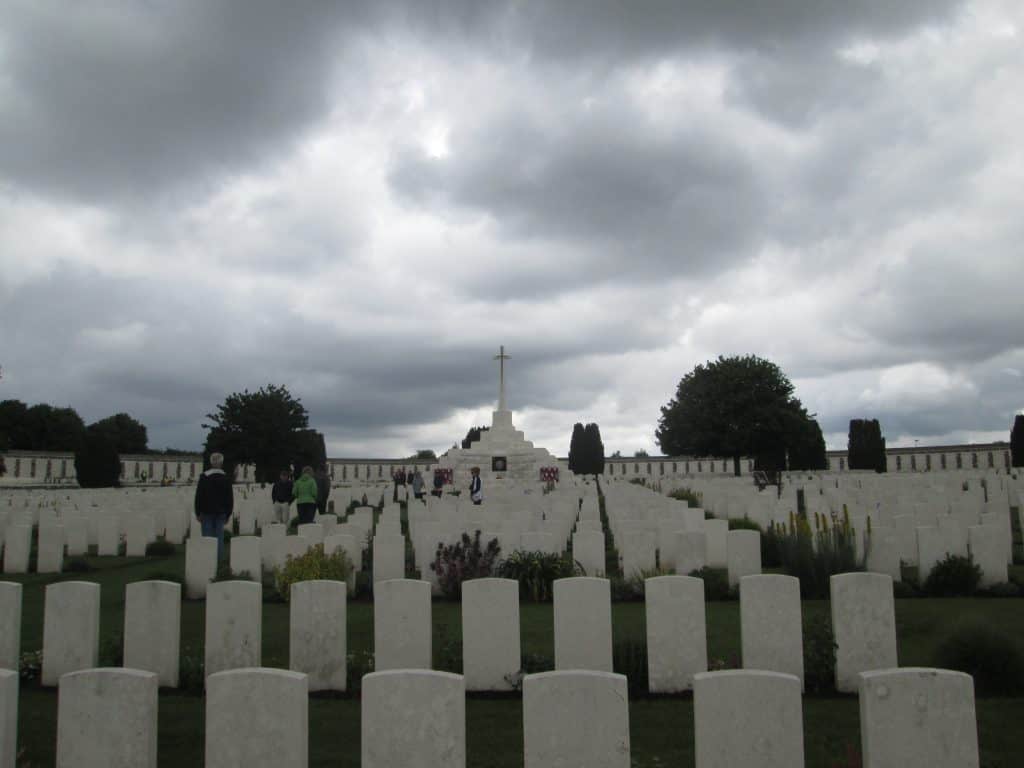
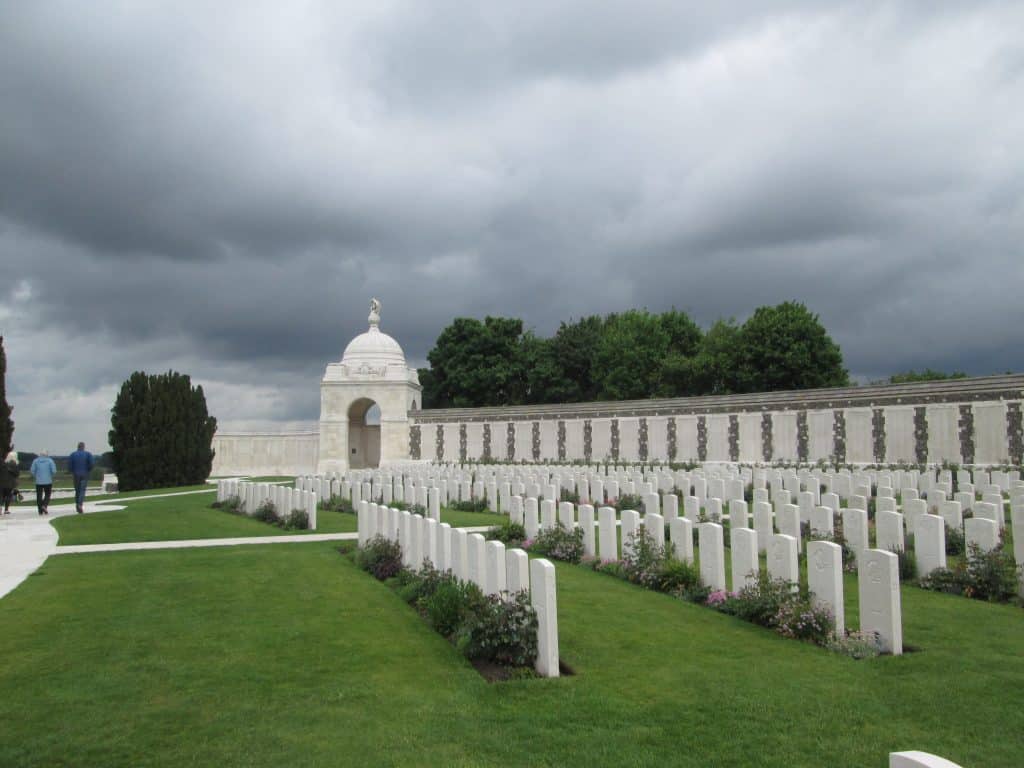
The largest Commonwealth cemetery on the Western Front in Flanders is Tyne Cot – 11 953 fallen are buried there, including 90 South Africans. Due to the nature of the fighting that took place in this area, the remains of many of the dead have never been found or buried, or the place where they had been laid to rest was forgotten. As a result, a memorial was also erected in Tyne Cot to commemorate these missing soldiers, displaying the names of 34 991 of them.
Early on in the war, it had already become clear that there would be great losses and that almost every town and city in Britain would want to pay tribute to the fallen from their area. Britain therefore intentionally designed memorials that would look fairly uniform to ensure that these monuments would be recognisable and look neat. The military cemeteries were approached similarly.
The first burials took place at Tyne Cot in October 1917 and graves were marked with wooden crosses. However, the fighting continued in that vicinity and some of the grave markers were destroyed. After the war, the cemetery, like many others, was more permanently laid out, with uniform concrete headstones replacing the wooden crosses. The layout and memorials were designed by Sir Herbert Baker – the same Baker who designed many famous buildings, including the Union Buildings in South Africa. He played a leading role in the design of all Allied memorials and sites commemorating the First World War.
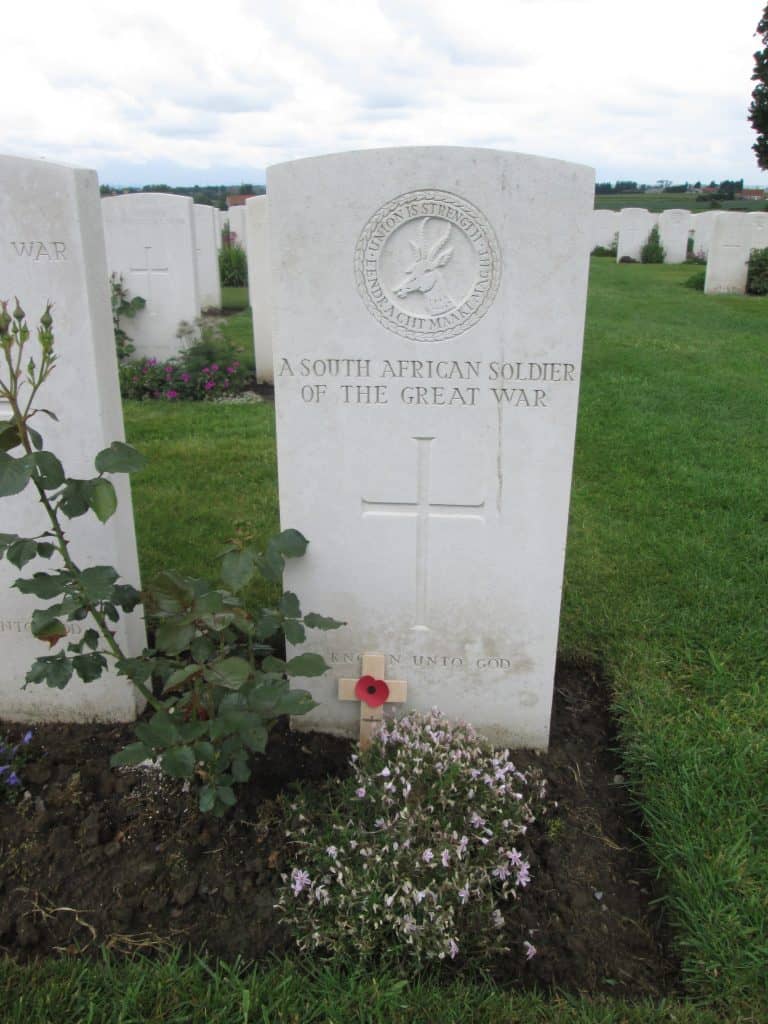
The headstones at Tyne Cot are simple. Next of kin of the fallen could choose what they wanted to be included on it. Sometimes there is just a name, a cross, or military emblem, other times a Bible verse or personal tribute. The 1st South African Infantry Brigade’s emblem appears at the top of the graves of the South African soldiers. It is a springbok’s head surrounded by a wreath with the motto “Union is strength” and “Eendracht maakt macht”. When remains could not be identified, but the uniform could, only “Known unto God” is written on the stone – one of the South African graves I came across was worded this way and it touched me deeply.
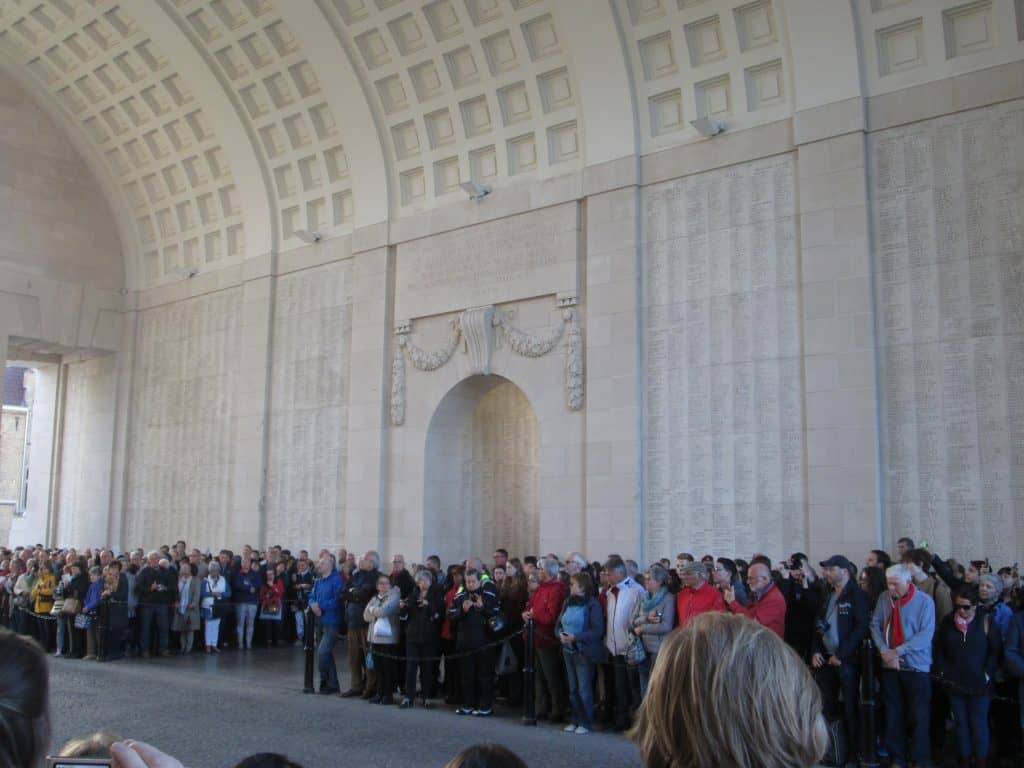
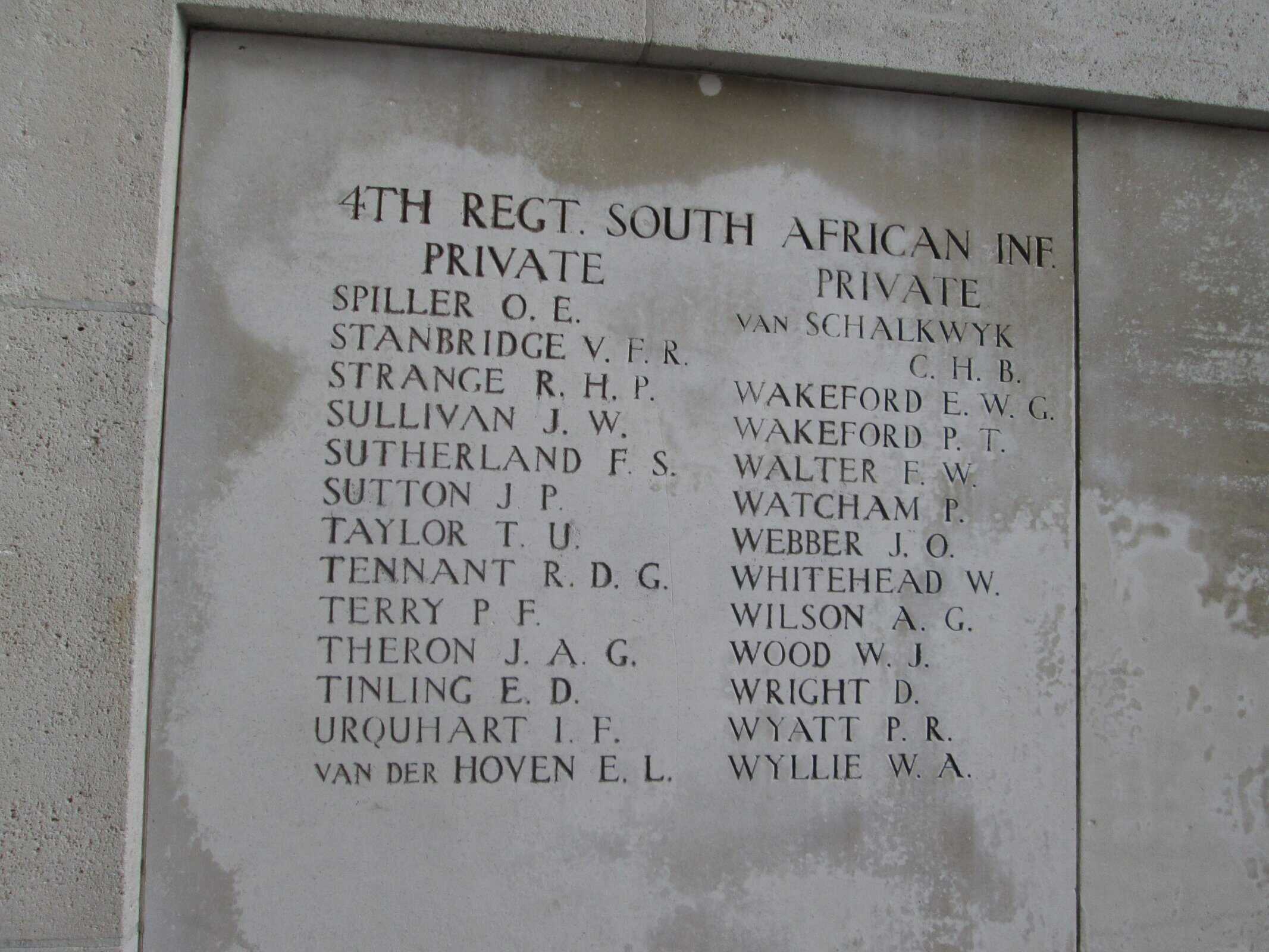
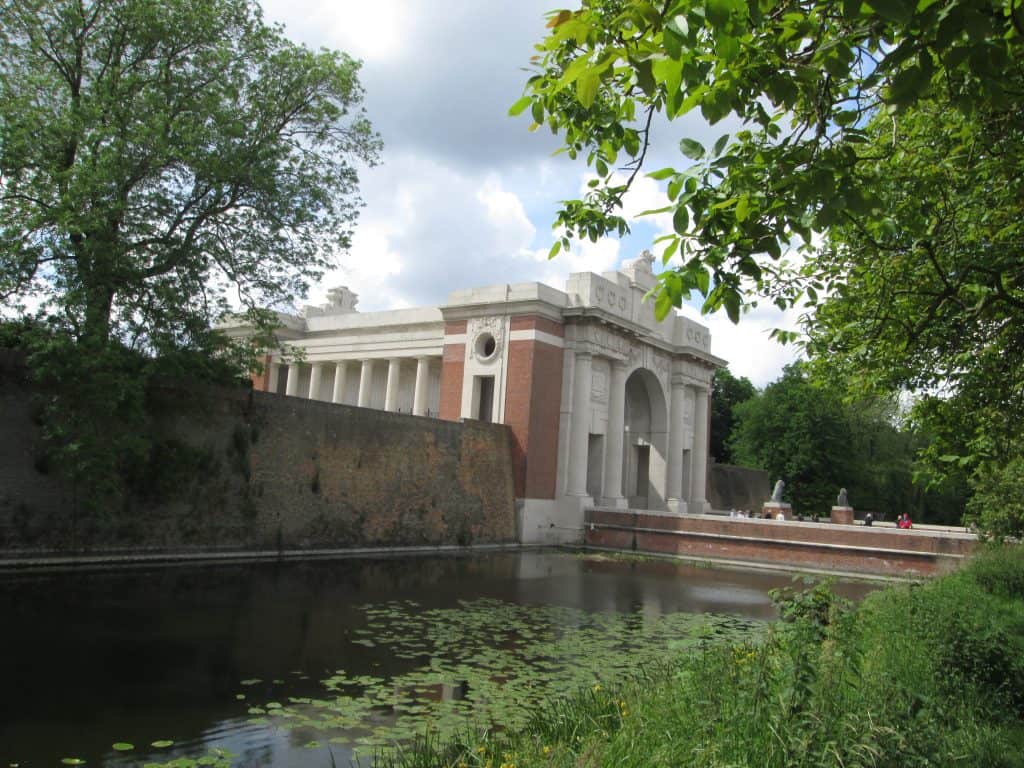
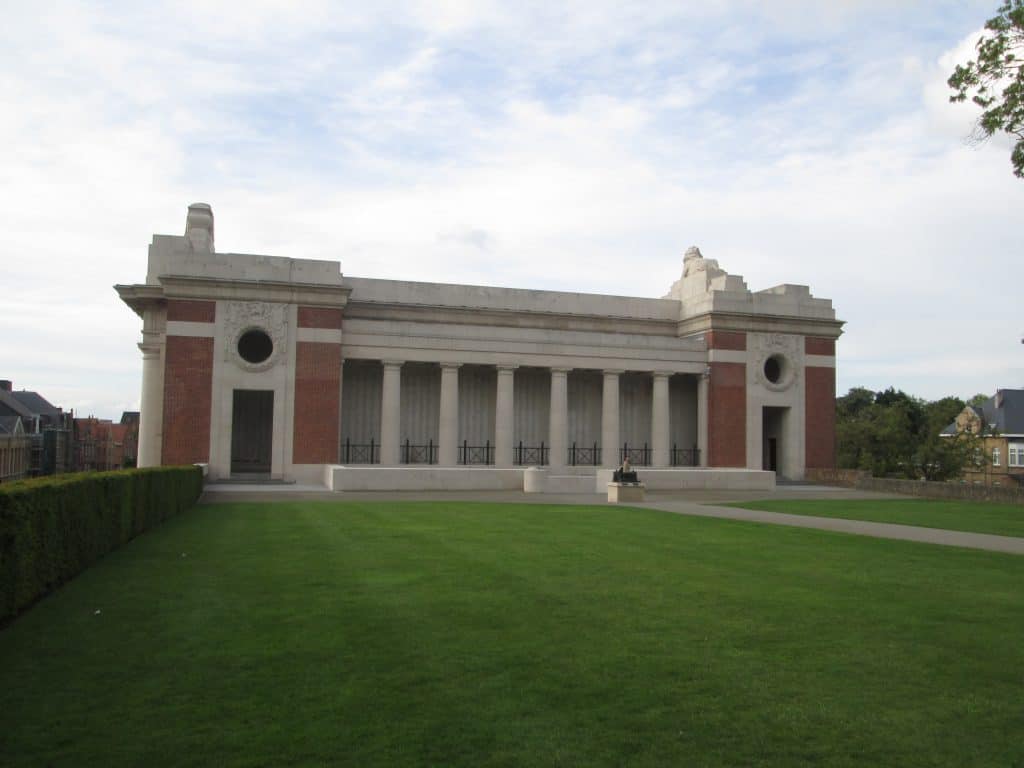
Close by Tyne Cot is another site where the fallen are still being honoured daily. This is the Menin Gate Memorial to the Missing, a memorial on the eastern side of the town of Ypres. It stands at the starting point of a main route that Allied soldiers followed to the frontline. This monument was designed by Sir Reginald Blomfield and unveiled on 24 July 1927. On the giant building the names of 54 896 missing persons, including 564 South Africans, can be seen.
Every evening at exactly 20:00, the gate is closed to traffic and a ceremony with a service, prayers, wreath-laying and military trumpet voluntaries take place there in memory of the fallen of the Ypres Salient. Attendance is free. It is a moving experience. Groups, such as veterans’ organisations, can apply to take responsibility for a specific evening’s ceremony. The building is currently being restored with a view to the centenary of its unveiling in 2027.
These memorials are definitely worth a visit, regardless of whether your ancestors were among the pacifists, rebels or soldiers. When you walk among the thousands of graves and suddenly come across the springbok on a tombstone or see familiar surnames on the walls of Menin Gate, you cannot help but be moved and think of the incredible waste of human lives that these and other wars have resulted in and continue to cause. Unfortunately, World War I was not the war to end all wars.
Also read: Wolraad Woltemade, a hero of the Cape with international tracks – AfriForum Wêreldwyd
Share on

Latest articles