

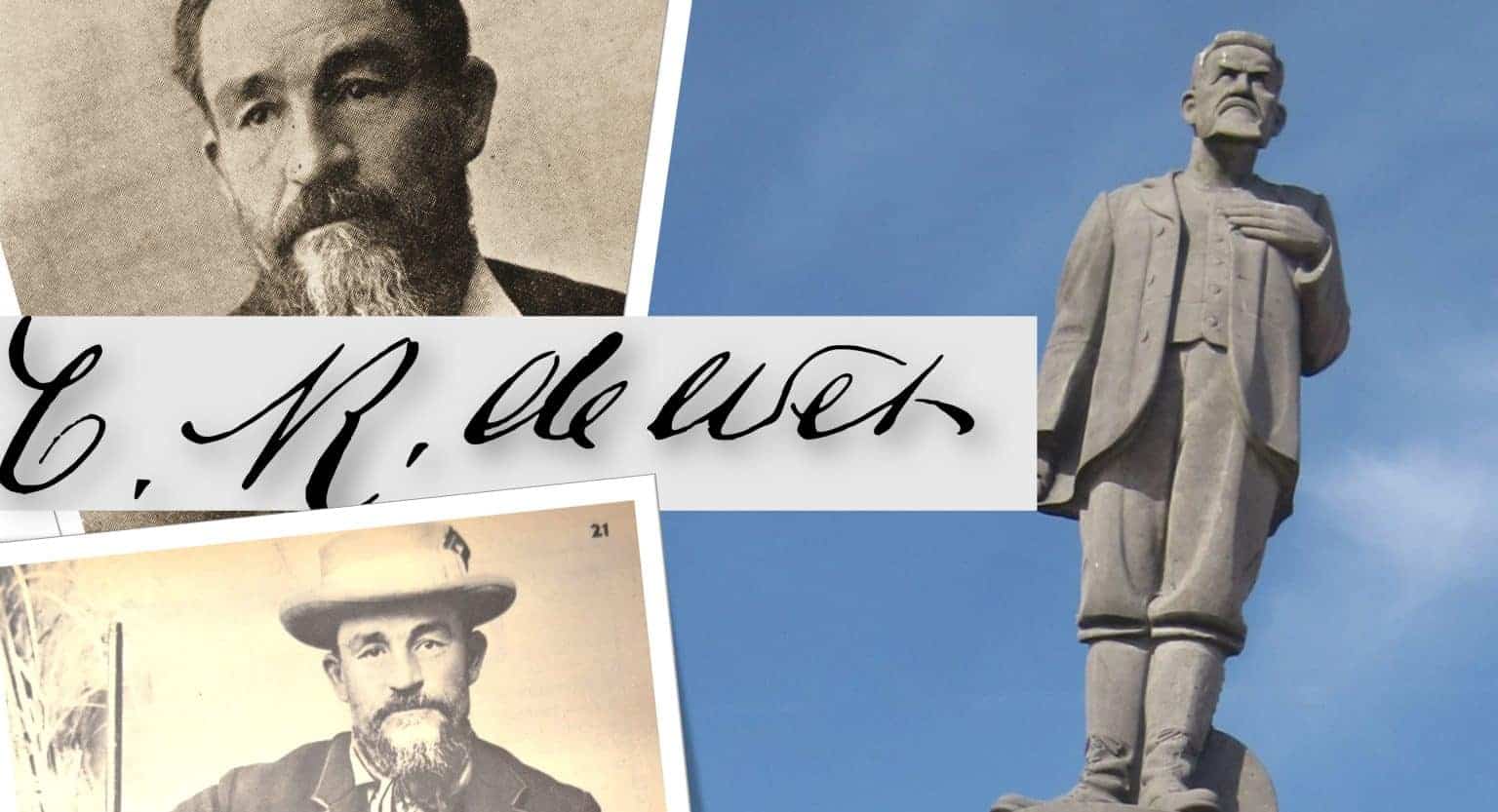
Poems, songs and biographies have been devoted to General De Wet. The admiration for this warrior was not limited to Southern Africa only. He was also revered elsewhere in the world (including in the Netherlands) for his bravery and resistance against the British forces during the Anglo-Boer War (1899-1902).
Christiaan Rudolf de Wet was born on 7 October 1854 on a farm near Smithfield and passed away in the same area in 1922. He is described as “the most legendary of all Afrikaner militarists” who mastered the art of guerrilla warfare. Even more remarkable is that he did so instinctively: after all, he had no formal military training. Biographies written about him include one by his contemporary, “Father” John Daniel Kestell.
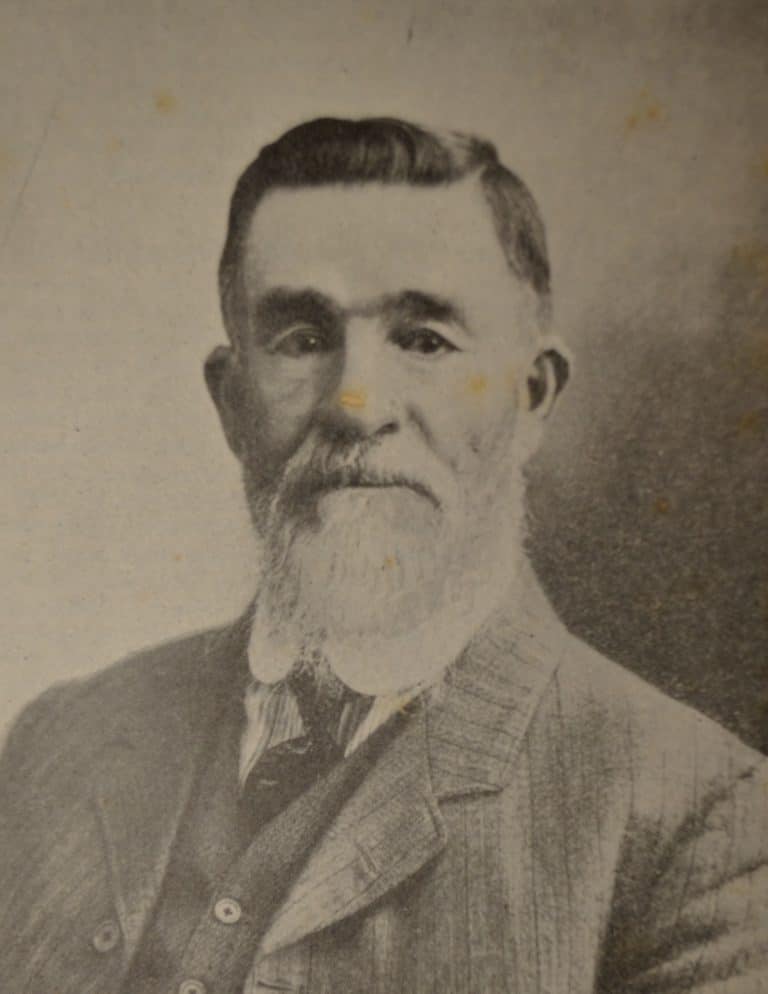
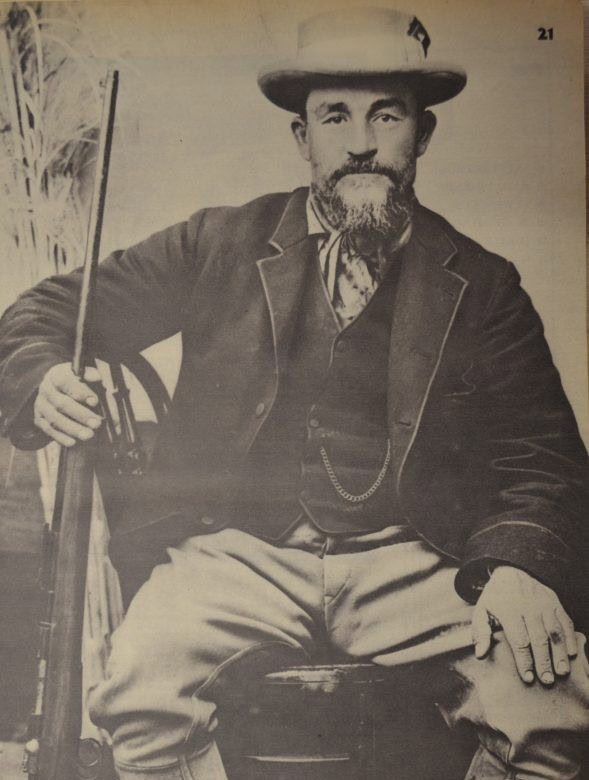
Dutch sympathy for the Boers’ struggle against the British resulted in tributes like the naming of neighbourhoods and streets after protagonists of this war. Admirers included the dynamic and wealthy Helene Emma Laura Juliane Kröller-Müller, and her husband Anton Müller.
The couple had business interests in Southern Africa and before the war Anton met some of the leaders during visits to the Boer Republics. After the war the couple hosted, among others, both President M.T. Steyn and De Wet at their estate. This estate near Otterlo remained their private property until 1909, after which it was developed as a park for public use. Today it is known as De Hoge Veluwe National Park and is managed by a private foundation.
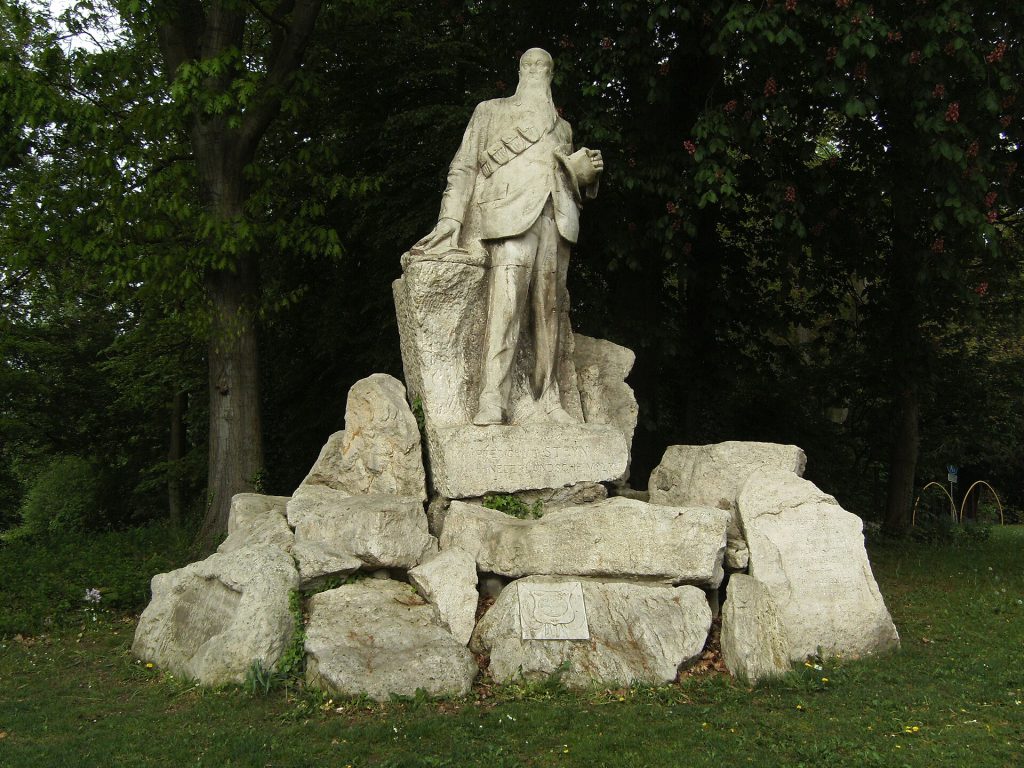
In 1915 Helene commissioned the Dutch sculptor, Joseph Mendes da Costa, to create a monument in honour of De Wet for the estate. Da Costa and she looked for a suitable location for it and decided on a sandy plain. Apparently, it was chosen because the landscape was reminiscent of the Free State. It was erected there in 1921.
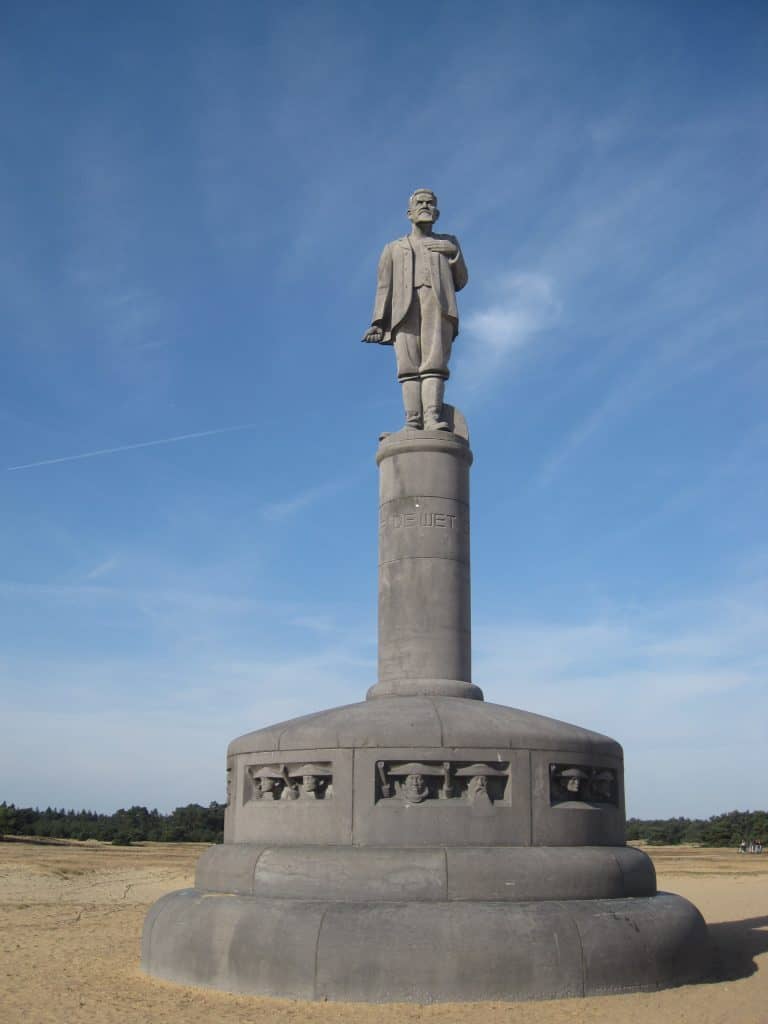
The monument, which is twelve metres high, consists of a base representing a bunker, with a column on top, crowned by the full-length statue of De Wet. He is standing with his left hand on his breast and his right arm straight down his side. He is staring into the distance in the direction of South Africa. Behind him is a lion, overshadowed by him. The bunker base includes eight relief panels, each depicting two Boers who are armed and looking outwards, keeping watch. Each one’s face is unique. It is alleged that some represent Presidents Steyn and Kruger, Da Costa himself and even possibly Helene. According to one source the monument is also unique because it was the first monument to be erected in The Netherlands portraying someone who was still alive at the time. However, the claim could not be verified.
Da Costa’s preliminary studies for the monument, which consist of sketches, glazed masks and plaster models, are preserved in the Rijksmuseum in Amsterdam and the Kröller-Müller Museum.
On 12 July 2025, members of the Nederlandse Afrikanervereniging visited the park and monuments. In their newsletter of the same month, it is reported that the “… Afrikaner monuments took our breath away … We saw why the 12-meter high Monument De Wet was built in the middle of the plain. General De Wet was right when he said more than 100 years ago that that place makes one long for South Africa!”
It is touching that the memory of this remarkable man is being preserved in this manner so far away from home.
Also read: First World War memories in Flanders Fields – AfriForum Wêreldwyd
Share on

Latest articles