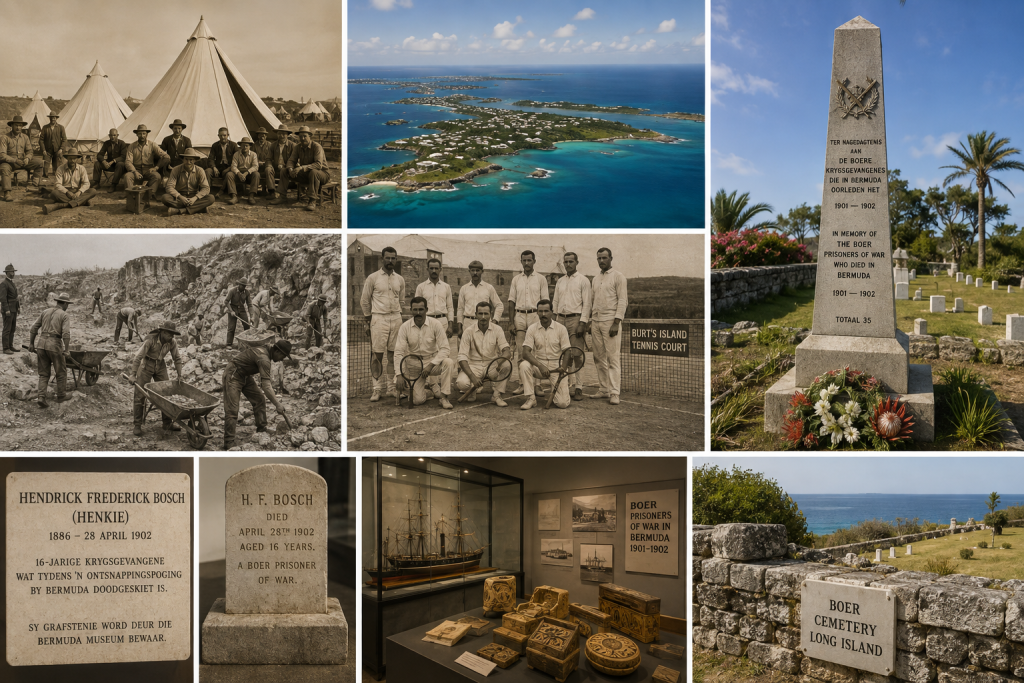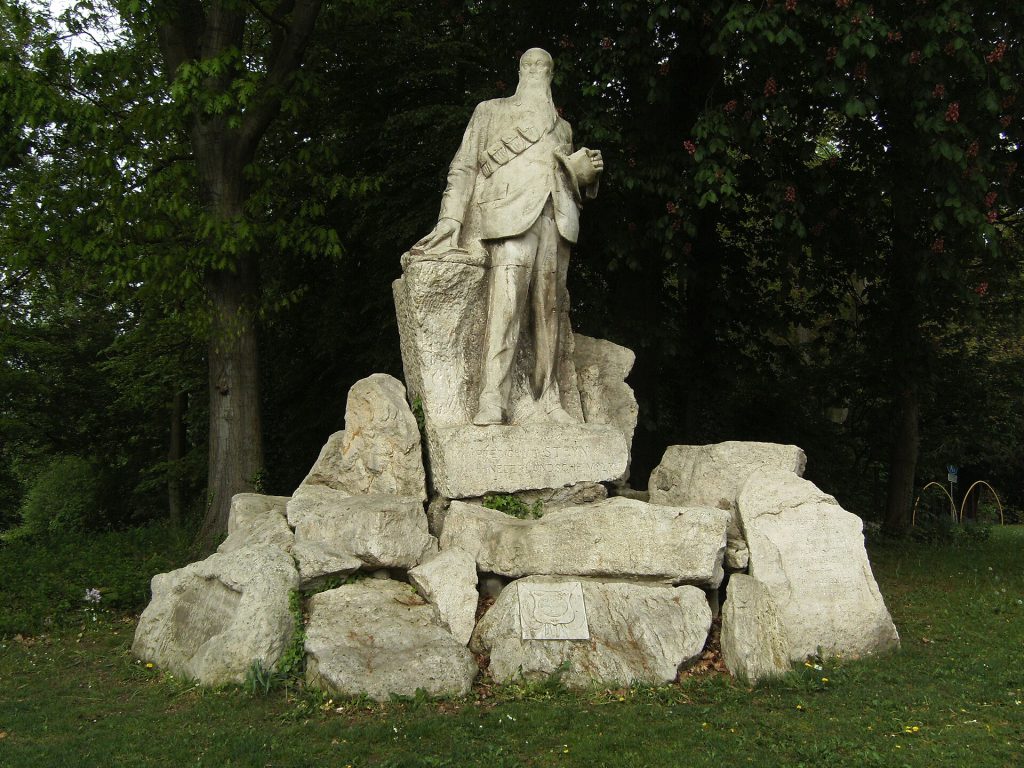


Some memorials commemorating the Anglo-Boer War (1899-1902) outside the country’s borders are relatively well-known. Others surprise you because you forget that this war fascinated many foreigners and that some of them even volunteered to participate on the Boer side.
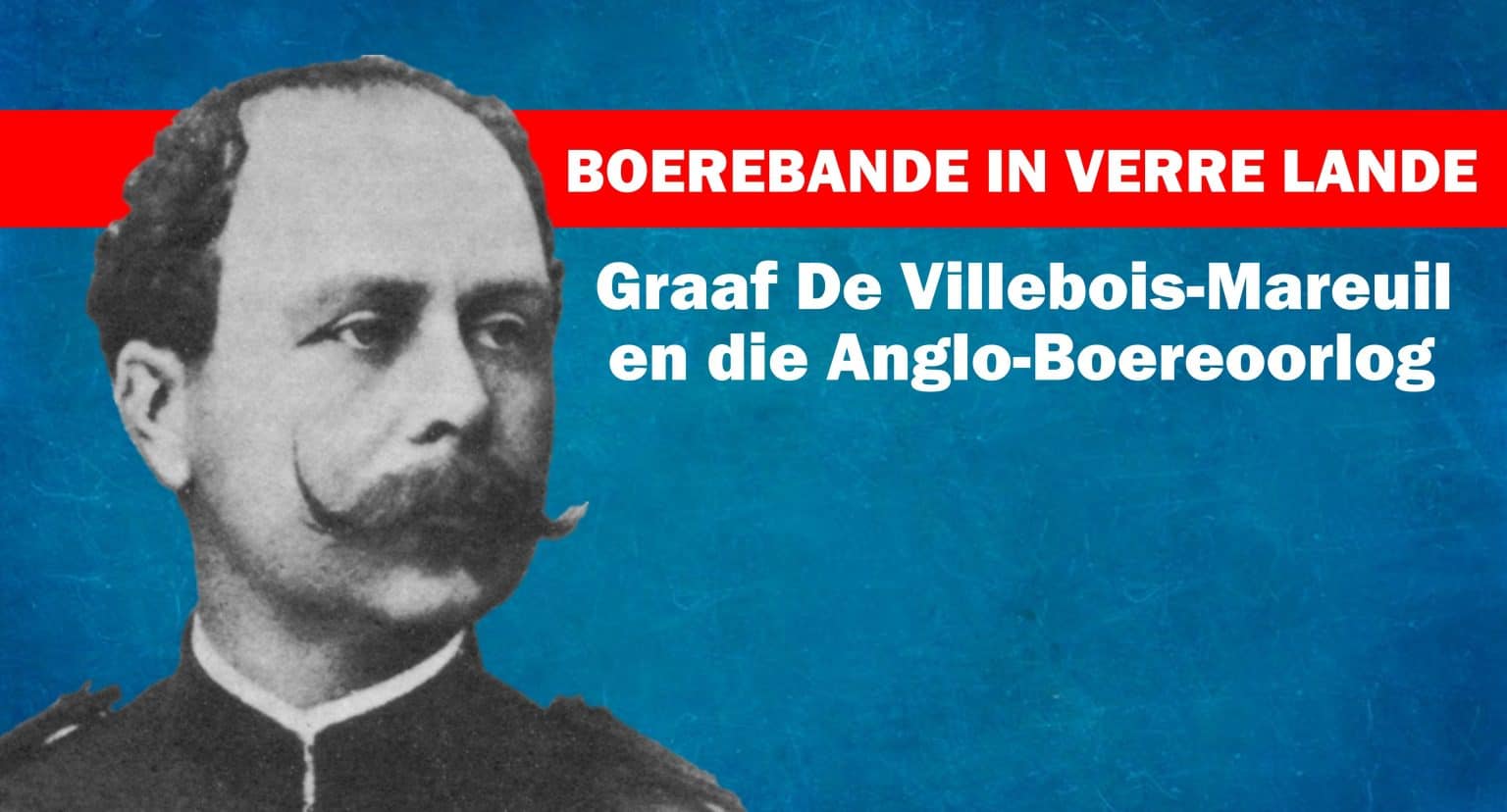
One of the most famous among them was Count George Henri Anne-Marie Victor de Villebois-Mareuil. He was born on 22 March 1847 in Montaigu, a village near the city of Nantes in France. His military career began with studies at the École Spéciale Militaire de Saint-Cyr where he attained the rank of second lieutenant. Next he went to Cochinchina (part of present-day Vietnam) where he served in the marine infantry and was promoted to the rank of lieutenant in 1870.
In 1870, the Franco-Prussian War broke out. De Villebois-Mareuil first joined the 7th Battalion “des Chasseurs à Pied” and then took command of the 6th Battalion. The French city of Blois was occupied by Prussian forces, but thanks to De Villebois-Mareuil’s exceptional leadership, it was liberated. He gained fame for his fearless actions during this battle: He was even seriously wounded but refused to leave the battlefield until the battle was over. Afterwards, his life was feared for for a long time and he ended up being hospitalised for nine months. He was awarded a medal for his bravery and promoted to the rank of captain.
Further military studies followed, and he served in Algiers. By 1892 he had attained the rank of colonel, resulting in him being the youngest colonel in the French army.
The death of his wife in 1893 was a major personal setback for him. In the same year, France invaded Madagascar, and he requested to be transferred there. When his request was refused, he joined the Foreign Legion in the hope that this move would give him the opportunity to go there. When this plan also failed, he resigned from the French army in 1896. He then wrote military articles. He was highly critical of the French government of the day.
Meanwhile, British and French forces were increasingly clashing in the scramble for Africa. In an incident in Sudan in 1898, the French were humiliatingly forced to retreat by the British. Interestingly, this happened while Herbert Kitchener was the governor of Sudan, before he joined the British forces at the southern tip of Africa in 1900 to take part in the Anglo-Boer War.
The setback in Sudan filled De Villebois-Mareuil, who had such strong military and national pride, with shame. When the Anglo-Boer War broke out, he saw it as an opportunity for him to contribute to restoring his country’s reputation. He therefore left for Lourenço Marques (now Maputo) to travel via Mozambique to the Transvaal where he could join the Boer forces as a volunteer to fight against the British. In December 1899, General Piet Joubert gave him the rank of major. During the Battle of Colenso (15 December 1899), he demonstrated his mettle and exceptional leadership qualities, after which he was promoted to major-general. On 17 March 1900, he was appointed as commander of all foreign volunteers fighting for the Boers.
It was a challenge to get the different nationalities to cooperate, but he seems to have succeeded. Despite his part in France’s struggle against the Prussians years before, he displayed great respect for the Germans under his command. He also wrote with praise of the Boers, even though some of their decisions sometimes frustrated him. “These people stand up in the face of the whole world and defy the decline of our much too advanced civilisations,” he declared.
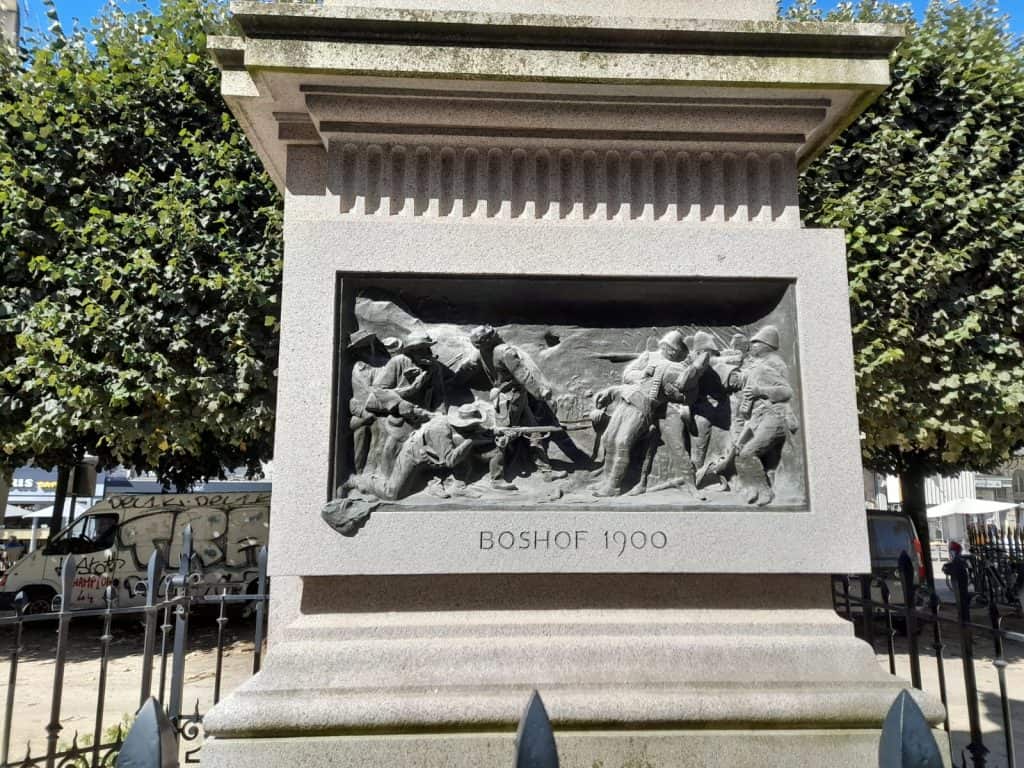
In the vicinity of Boshof, a traitor revealed the position of De Villebois-Mareuil and his men to the British. A battle between this small band of volunteers and a superior force of 750 British soldiers under the command of Lord Methuen ensued on 5 April 1900. The British peppered them constantly with Maxim machinegun fire for three hours. De Villebois-Mareuil was fatally wounded – he died on a hill on the farm Kareepan. By that time, only about 30 of his men remained. His body was transported to Boshof and he was laid to rest there by the British with full military honours. Methuen himself paid for the funeral. In 1971, his remains were reinterred in the Heroes’ Acre at Magersfontein.
His horse was taken back to Britain by Lord Chesham, where it died in 1911. The horse’s heart and ceremonial decorations were buried on the village common of Latimer in England, next to the memorial in honour of local residents who served in the Anglo-Boer War.
The noble family of De Villebois was highly esteemed in France. After all, their family tree can be traced back to 1180. The news of De Villebois-Mareuil’s death was therefore met with outpourings of great sorrow in France. A service in his memory held in Notre Dame in Paris was attended by 10 000 mourners.
It was decided that a monument should be erected in his honour in Nantes. The square in front of the Bourse building in Nantes was chosen as location for it. On either side of the pedestal of the monument two bronze friezes depict the Battles of Blois and Boshof. On top is a statue of De Villebois-Mareuil dying in the arms of a figure representing France, under the French flag. It was created by the sculptor Raoul Verlet and paid for from public contributions to a fund initiated by the newspaper La Liberté. It was unveiled on 26 October 1902 and allegedly Paul Kruger attended the ceremony.
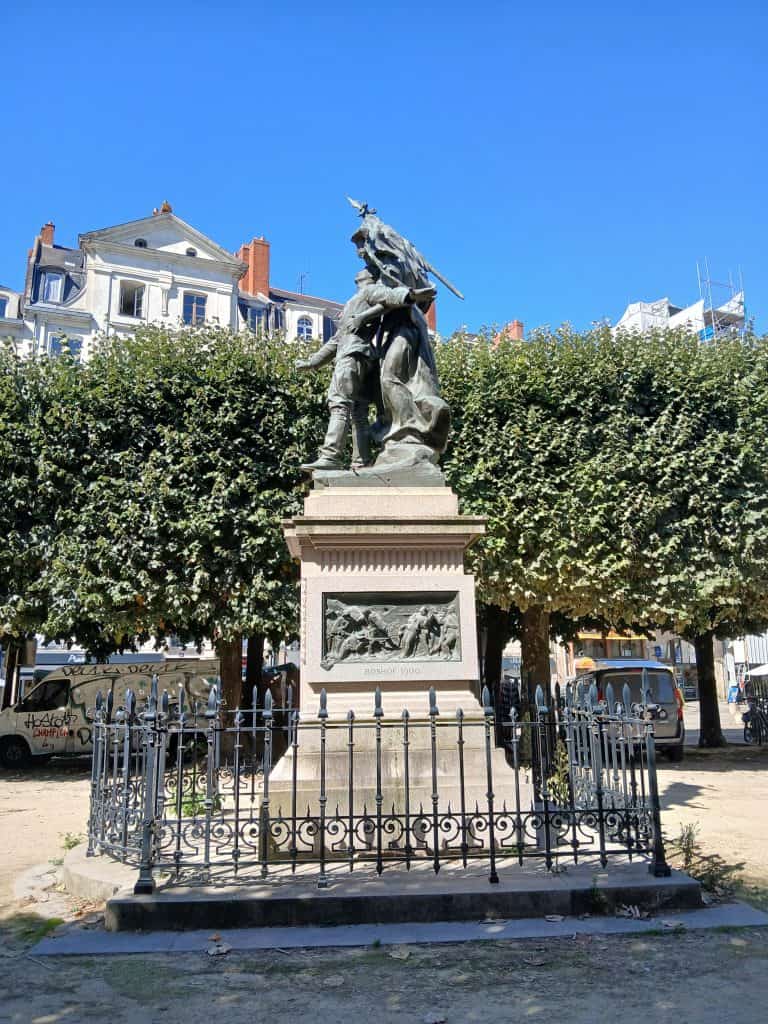
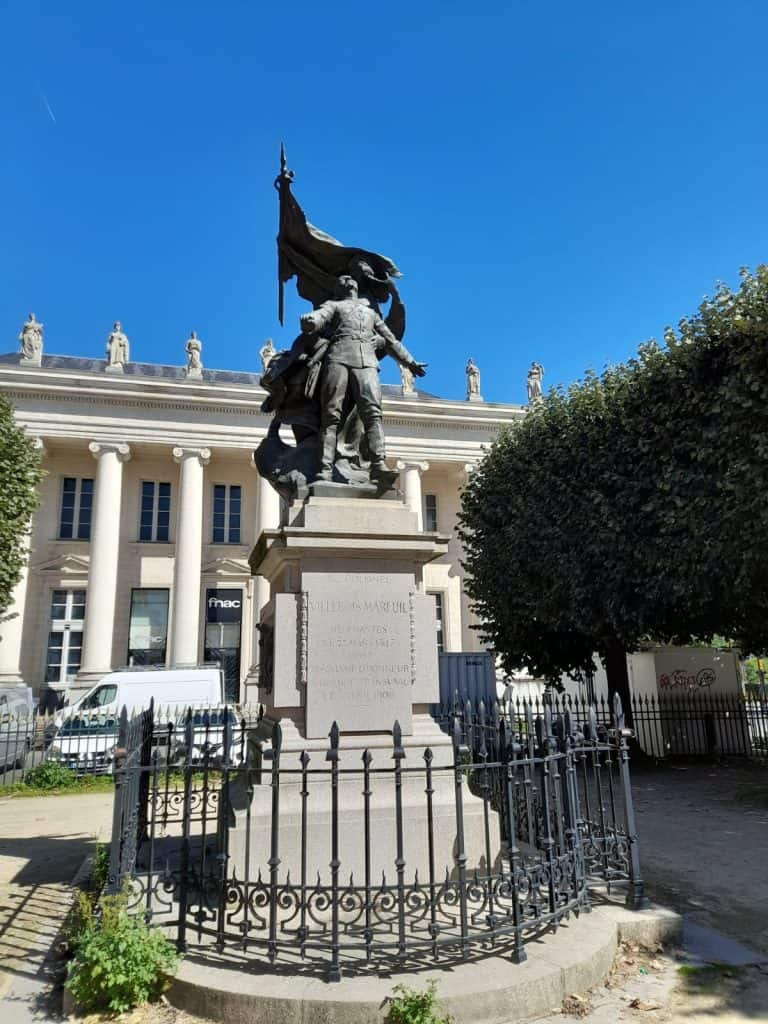
More statues in his honour were also erected in Orleans and in Grez-an-Bouère.
De Villebois-Mareuil was succeeded as count by his brother Christian, but with the latter’s death in 1924, the title died out.
The monument in Nantes has had many adventures. During the German occupation of France during World War II, several French bronze statues were melted down and reused for the manufacture of weapons, however this statue was spared because the Nazis appreciated that De Villebois-Mareuil fought against the British! In 2020, it was again attacked with paint by anti-colonialism protesters. However, it was restored and still occupies this place of honour in the city. It also appears on the list of the ten most important statues in the city, drawn up by the Nantes Metro. As a result, the story of this remarkable man and his heroic deeds is still remembered today.
Also read: Delville Wood: A deadly battle remembered
Share on

Latest articles