

By Alana Bailey
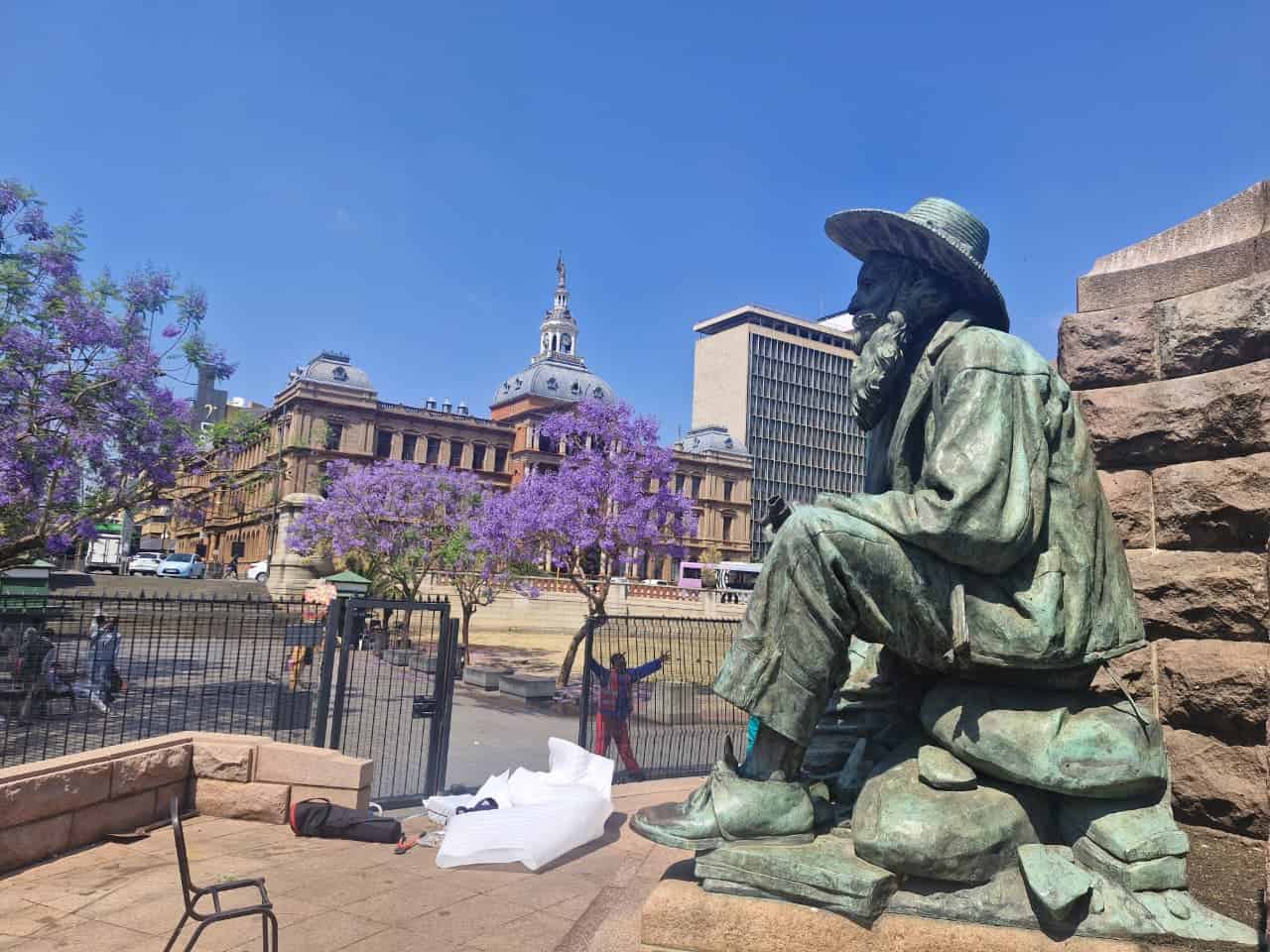
Recently the Kruger Monument on Church Square in Pretoria was in the news due to the vandalism it suffered, AfriForum’s project to secure it and the unveiling of the replica of Oom Paul’s statue in Orania. Although the monument on Church Square is very well known, few people realise what an interesting history it has and that the four Boer sentries surrounding Oom Paul once stared out across the English countryside!
Let us start at the beginning: The wealthy businessman Sammy Marks was a great admirer of Oom Paul. In the 1890s, he offered him and the Executive Council of the South African Republic (the ZAR) a monument dedicated to Oom Paul that he was willing to erect at his own expense. He reserved £10,000 for this purpose, which was a fortune at the time. Sculptor Anton van Wouw was commissioned to do the sculpting and travelled to Europe to complete the statues in Italy.
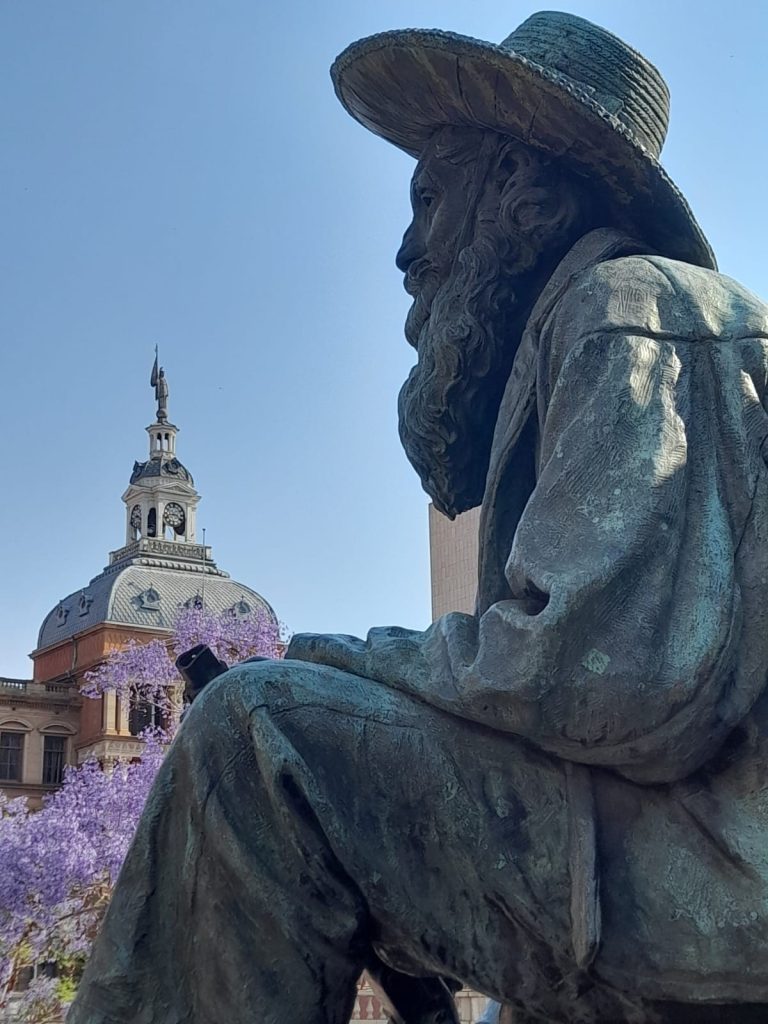
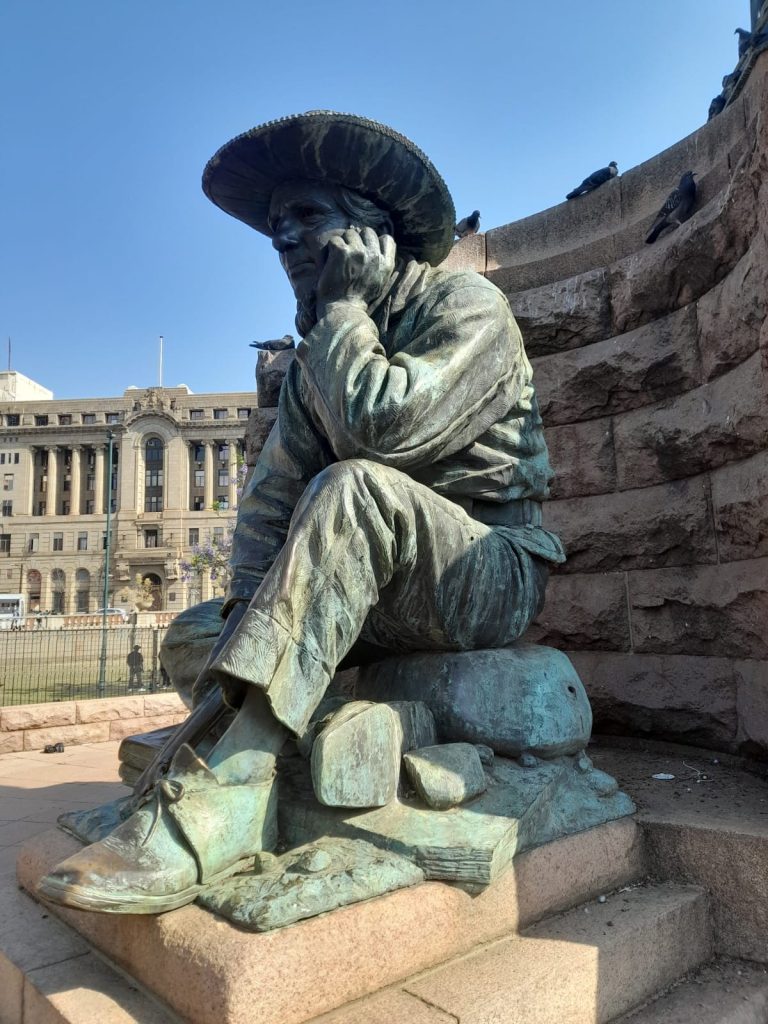
The design comprised a statue of the old president that would stand 4.04 meters high, surrounded by four seated sentries, each measuring 2.02 meters high. Two of them were to be dressed in Voortrekker attire and two like farmers from the 1880s. It was also decided to that four bronze panels would be included on the pedestal of the monument that would depict four highlights from Oom Paul’s life.
The statues were cast in Rome and then shipped to Delagoa Bay (today Maputo), but the Anglo-Boer War (1899-1902) was raging by then and all plans to complete the monument were put on hold. The statues remained in the harbour and Marks lost interest in the project. When it became apparent that the British were going to win the war, he presented the statues of the four sentries to Lord Herbert Kitchener, Commander-in-Chief of the British forces.
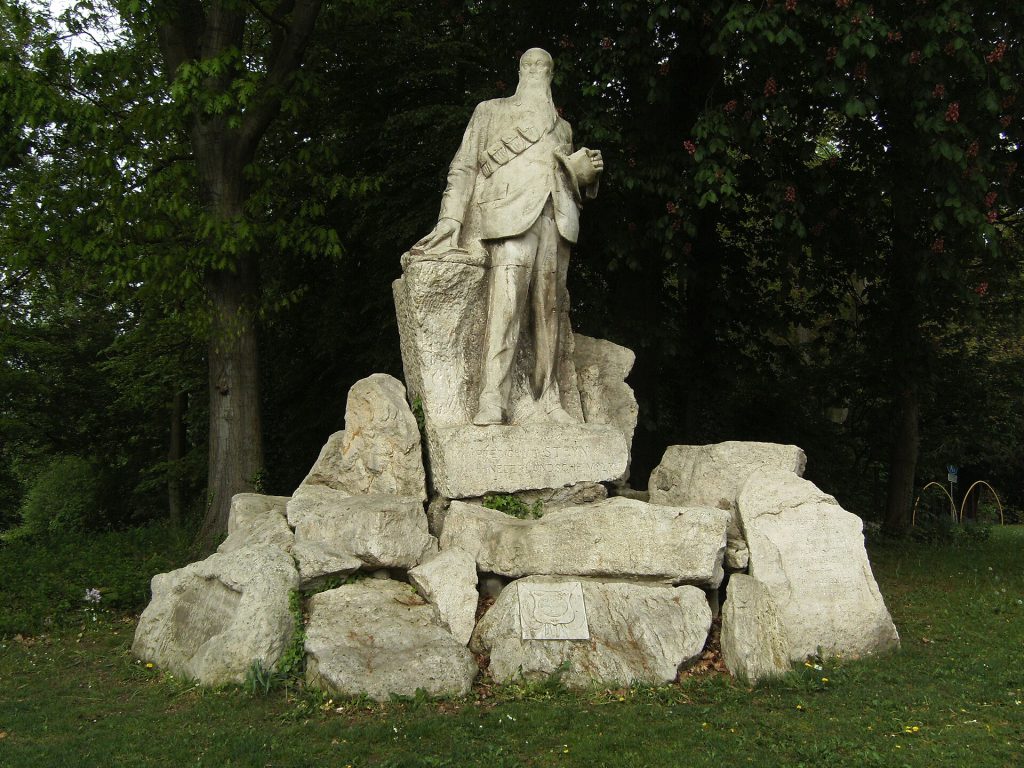
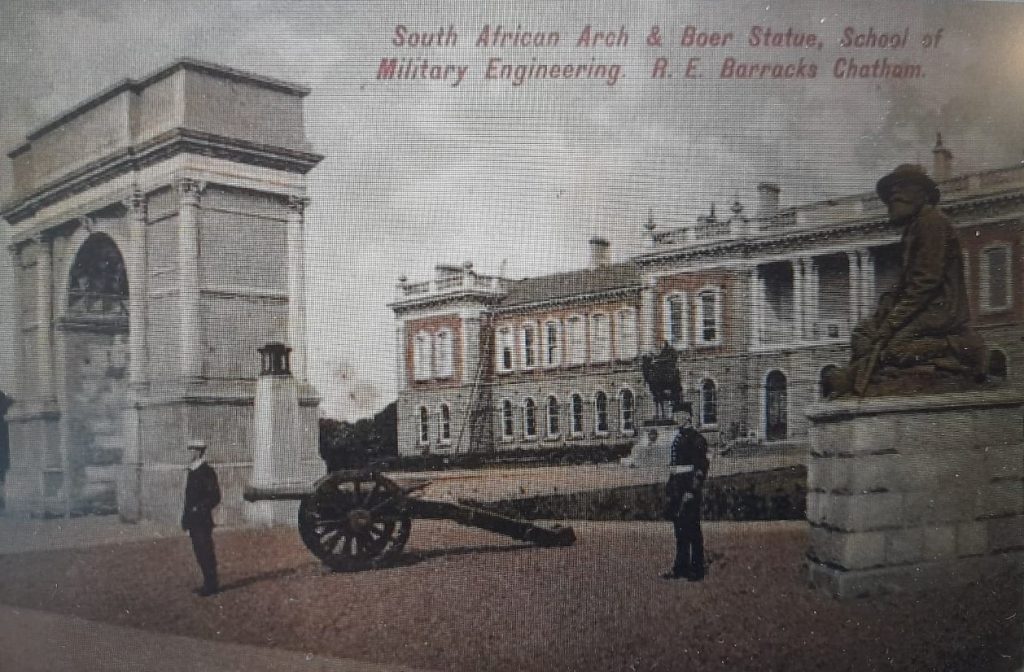
In 1902, Kitchener had the four statues transported to England, where they would remain for the next eighteen years. Initially, they were taken to the barracks of the Royal Engineers at Chatham. Kitchener proposed that the statues could be used as a memorial to soldiers who had fallen in the Anglo-Boer War. Disagreements ensued among the members of the committee that had to decide on the design of this memorial. For example, some of them felt that you could not honour your country’s fallen with statues of the “enemy” bearing arms! Eventually, an arch was erected as a memorial at Chatham with the statues on pedestals some distance from it. The memorial was unveiled by King Edward VII on 26 July 1905.
When Kitchener purchased an estate near Canterbury in Kent in 1910, two of the statues were moved there, where they were erected in 1913. In the meantime, however, the first Prime Minister of the Union of South Africa, Louis Botha, began talks with Kitchener to negotiate the return of the statues. Kitchener steadfastly refused. This was not considered to be an urgent matter and the negotiations dragged on. The First World War (1914-1918) caused further delays, however the close military relationship between the British and Union forces made the British more receptive to the requests.
In 1920, Jan Smuts (then South African Prime Minister) wrote to Lord Alfred Milner, the British Secretary of State for the Colonies, to raise the matter once again. Kitchener had died in 1916, and permission for the return of the statues was therefore sought from his heir (his nephew, Viscount Broome) and the Royal Engineers. All parties agreed. Britain even offered to pay the transport costs. In 1921, the statues were officially returned to South African representatives and finally the four sentries were on their way home.
Meanwhile, the giant statue of Oom Paul remained in the harbour in Mozambique, until negotiations succeeded and it could be transported to Pretoria, where it was unveiled on 24 March 1913 in Prince’s Park.
After the return of the sentries, the Pretoria City Council decided to erect the monument with a marble pedestal on Station Square (in other words, in front of the train station). At last, the five statues were reunited, and the monument was unveiled there on 10 October 1925, exactly one hundred years after the birth of Oom Paul.
However, the long-cherished ideal of relocating the monument to Church Square gradually gained support and on 10 October 1954 it was unveiled there with the pedestal we know today. Residents of Pretoria often joke that Oom Paul got tired of waiting for the train and went to Church Square to catch a bus there!
The detail of the statues is remarkable – Van Wouw was relatively unknown when he was commissioned by Marks. His task was further complicated by the fact that Oom Paul refused to pose for him, and he had to “stalk” the old president!
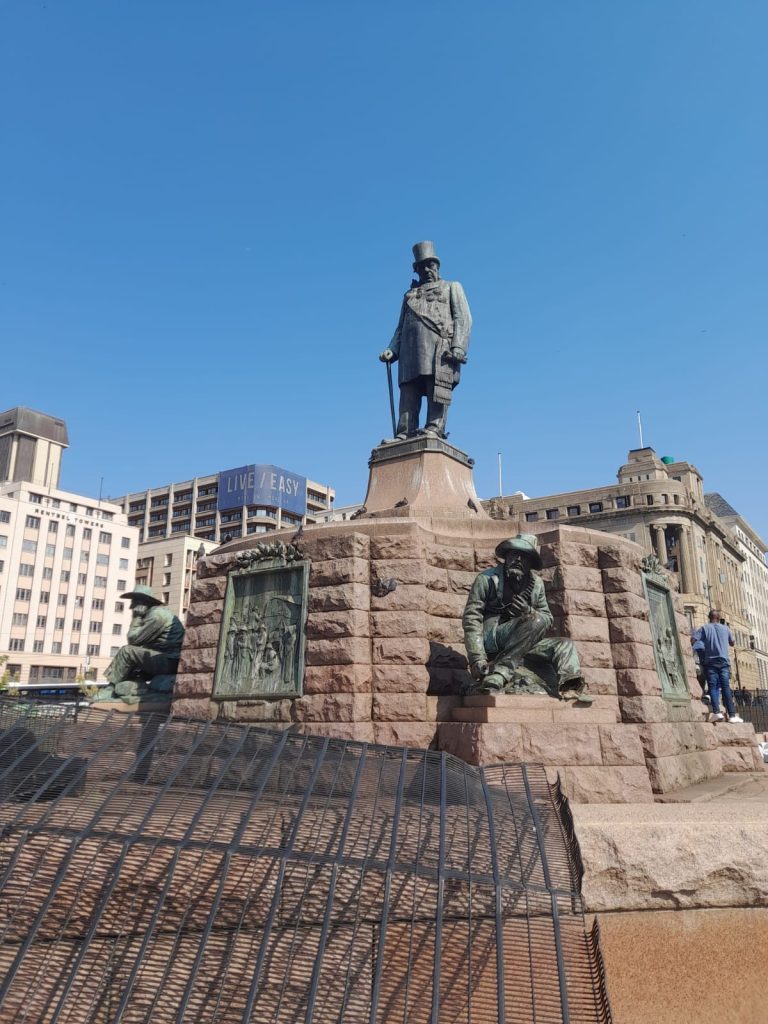
Nowadays, the monument is enclosed by a transparent metal fence. In daytime, its gate is usually open, and the statues can be viewed up close. Security guards supervise visitors, but still the vandals were able to cause serious damage to it at night in 2025. Funds to restore it properly are still lacking.
It is a tragedy that this beautiful monument with its eventful history is still in such disrepair. AfriForum thanks our members who made it possible to provide temporary improved security. Any donations to our heritage projects will also be used to find more permanent solutions, for example to install cameras to keep an eye on the monument at night. Donations can be paid into:
Bank name: FNB
Account name: AfriForum MSW
Bank code: 261550
Current account number: 623 498 98 398
Reference: Your cell number and “Oom Paul”
Also read: Boer graves on St Helena
Share on

Latest articles