

By Alana Bailey
Although South Africans were not unanimously in favour of participation in the Second World War (1939-1945), as was the case with the First World War (1914-1918), no one can deny the role that South Africans played in the victories in both wars. This was not only through participation in battles, but also by means of humanitarian aid.
The South African Air Force (SAAF) was established on 1 February 1920. This followed after General C.F. Beyers had observed military exercises in Europe in 1912 and realised that it would be essential to include aircraft in the local defence force. The first flight training began in 1913. South Africa was the first dominion (in other words a self-governing country within the British Empire) to establish an air force.
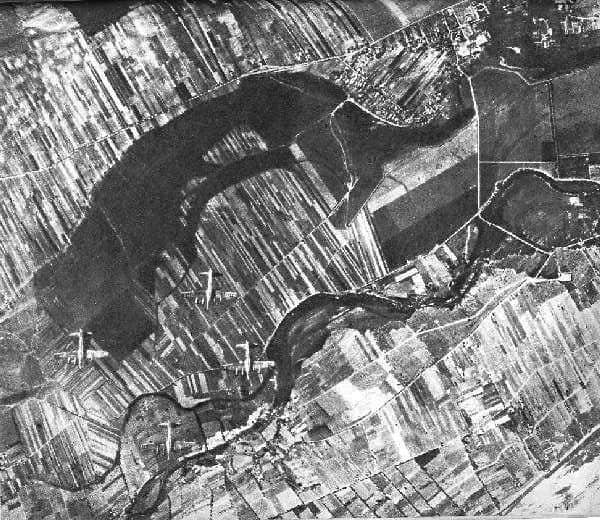
Approximately 50 000 members of the SAAF participated in the Second World War. They were involved in operations in the Middle East, East Africa and Europe, among other places. The contribution of 31 and 34 Squadrons to the Warsaw Airlift is one of the most outstanding achievements in the country’s military history, but unfortunately very few people still know about it today.
Germany occupied Poland in September 1939. Polish resistance to the German occupation was strong and liberation movements were formed to oppose it. On 1 August 1944, partisans started an uprising in Warsaw. Initially, great success was achieved. However, the Germans isolated the areas under the control of the partisans. The trapped partisans were in urgent need of weapons, ammunition and medical supplies.
In response to their desperate pleas, the British Prime Minister, Winston Churchill, ordered 205 Group to undertake supply flights to Warsaw. This group was commanded by a South African officer, Brigadier Jimmy Durrant, and included 1 586 Special Polish Service Squadron, 178 and 148 Squadrons of the British Royal Air Force, as well as 31 and 34 Squadrons of the SAAF.
This operation became known as the Warsaw Airlift, Warsaw Air Bridge, or the Warsaw Concerto.
The flights took place from 13 August to 22 September 1944, covering a round-trip distance of 2 815 km, departing from Italy. Most of the route had to be covered in daylight over hostile and fiercely defended areas. Not only did the crews have to face air attacks and merciless anti-aircraft fire, but they also had to drop the supplies they were carrying accurately on very specifically identified street areas. Although the aircraft were armed with machine guns, only a limited amount of ammunition could be taken on board, as the bulk of each aircraft’s cargo capacity had to be used for the supplies. For the same reason, as little fuel as possible was carried – only an estimated 9% reserve was included per aircraft. They had to fly at a low altitude (which posed great challenges while crossing several mountain ranges) and radio communication had to be kept to a minimum to attract as little attention as possible.
The closer they got to Warsaw, the clearer a glow on the horizon could be seen. This was their target – the capital of Poland was in flames. Due to the thermal effect of the many fires in the city, the planes would then begin shaking wildly. The crews had to fly at about 350 meters to drop their cargoes accurately, while hot air and smoke inside the planes impaired their breathing and vision. They had to dodge anti-aircraft fire and often saw their comrades’ planes being hit and exploding around them.
Each flight was a heroic act and testifies to the courage and perseverance of these men.
The Polish uprising was unsuccessful, but the damage it inflicted on the enemy’s manpower and supplies contributed to the eventual victory of the Allied Forces. It is estimated that almost 10 000 Germans were killed and 7 000 wounded during the uprising. A further almost 7 000 were reported missing in action. On the Polish side, the losses were worse. The total number of civilian casualties was estimated at 180 000. 69 Members of the SAAF were killed during the flights – the total death toll among the pilots and their crews was about 360. Several received awards for their bravery. From a military point of view, the airlift was later judged to have been a reckless operation that should never have been undertaken. Nevertheless, it brought hope to the besieged Poles and built close bonds of friendship between South Africans and Poles.
The heroism of the SAAF members is commemorated in various places. In Poland, the graves of the fallen are in the Krakow Rakowicki and Poznan Old Garrison Cemeteries, where wreath-laying ceremonies still take place. In 1989, a monument in honour of all participants in the Warsaw Airlift was also unveiled in the town of Newark-on-Trent in England. The emblem of the SAAF is engraved on it, along with those of the other air forces that participated in the operation. Its inscription reads:
WARSAW AIR BRIDGE
MEMORIAL
IN TRIBUTE TO 250 AIRMEN
OF BRITAIN
THE COMMONWEALTH
AND POLAND
WHO SACRIFICED
THEIR YOUNG LIVES
IN DESPERATE ATTEMPTS
TO FLY FROM
DISTANT RAF BASES IN ITALY
WITH ESSENTIAL SUPPLIES
FOR THE
FRONT LINE CITY OF WARSAW
DURING THE 1944 UPRISING
In Melrose, Johannesburg, they are also included among those commemorated by the Katyn Monument. This monument consists of concrete pillars that combine to form the image of a cross. It was initially erected to commemorate the Katyn Massacre, the incident when 14 500 Polish officers, policemen and civilians were executed by the Stalinist regime of the Soviet Union in 1940. The commemoration of the participants in the Warsaw Uprising and Airlift was later added to it.
There are many interesting sources about the Warsaw Airlift. The website of the South Africa War Graves Project includes a list of all the members of the South African Air Force buried in the Krakow Rakowicki and Poznan Old Garrison Cemeteries in Poland. A particularly interesting article can also be found on the Defence Web website under “Military history”. It describes the heroic deeds of several of the crews during these flights, which can literally be described as a journey to hell and back.
These events serve as a reminder of the tragic and futile sacrifice of talented young people’s lives during wars – something that is being reflected on again right now.
Also read: “Oom” Paul Kruger’s travelling Boer sentries
Share on

Latest articles