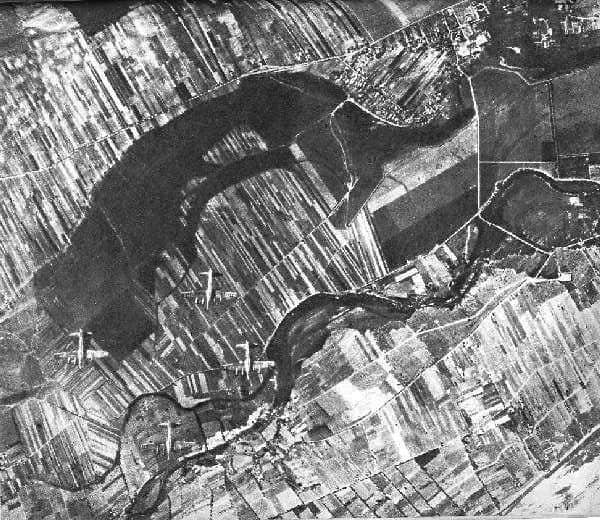



The Somme Offensive (1 July to 18 November 1916) was one of the deadliest military actions in human history. It took place during the First World War in France, where soldiers of the British and French forces faced off against German forces. Approximately three million soldiers took part in it, of whom more than a million were killed or wounded.
The offensive comprised several phases, including battles at Delville Wood and Butte de Warlencourt, where South African soldiers showed their mettle as part of the British forces.
Delville Wood was, as the name suggests, a lush forest in France. On 15 July 1916, the South African Infantry Brigade (SAI) was ordered to attack and capture the German positions in this forest.
During the next five days, devastating battles ensued. The German artillery fired mercilessly at the soldiers of SAI and a Scottish division. The men had to go without food and sleep for days, their ammunition ran out and the wounded could not be evacuated. Their groans and the incessant artillery fire made life unbearable for the remaining soldiers. In 7 hours on 18 July, the Germans fired up to 400 bombs per minute down on them. Officers reported that by 20 July, soldiers with their rifles in hand were literally tipping over and falling asleep under heavy bombardment due to exhaustion. Nevertheless, the order remained that the wood had to be captured at all costs. Of the 121 officers and 3 032 men who entered the wood on 15 July, eventually only 3 wounded officers and 140 men were left. The bodies of 578 of the fallen have never been recovered, while many who were found could not be identified.
Tragically, the site was not captured completely – the last German troops were not driven out until August 1916.
Of the once beautiful forest, only a single tree, a hornbeam, remained standing. It can still be seen today and is marked by a memorial.
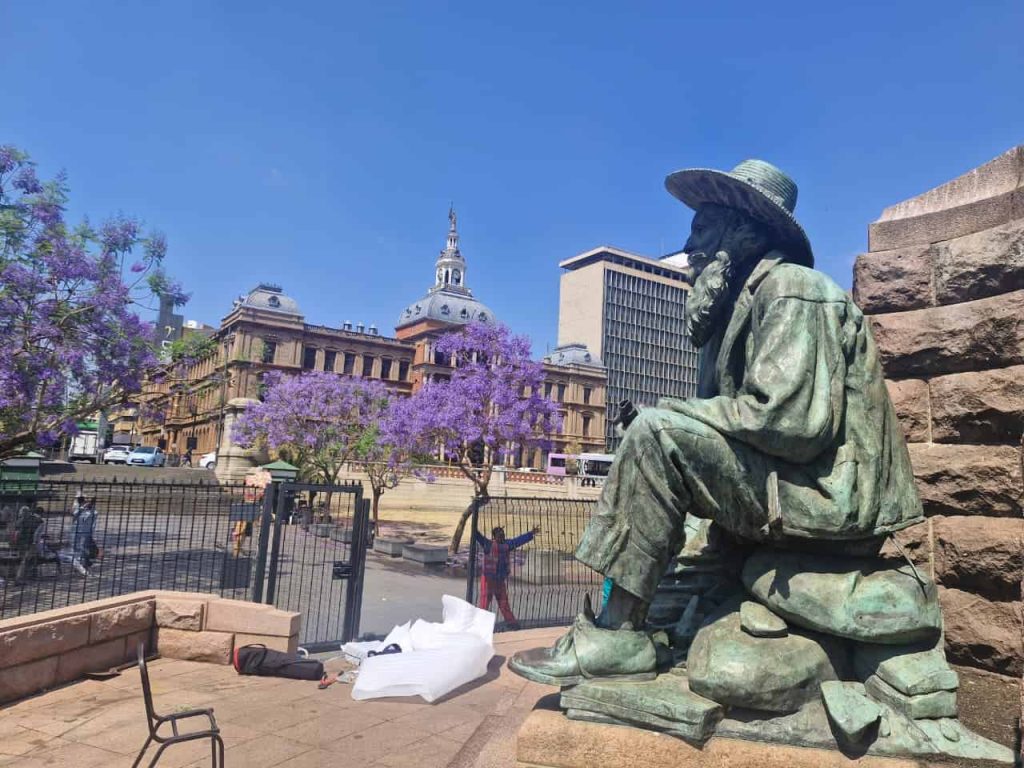
After the war, the battlefield was purchased by the South African government with the aim of erecting a memorial to South African soldiers there. Sir Percy FitzPatrick, known, among other things, as the author of the book Jock of the Bushveld, negotiated the purchase of the land on behalf of the government. It was still a scene of devastation, with dead tree stumps and bomb craters, but the South African Department of Forestry planted two rows of oak trees to restore the forest. The seed from which these trees were grown, came from a tree planted in South Africa in 1688 by a French Huguenot, Jean Gardiol. A memorial designed by Sir Herbert Baker was erected on the site. Replicas of it were also erected in Pretoria at the Union Buildings and in the Company’s Garden in Cape Town. Its inscription pays tribute to all South Africans who fought in Europe, Asia, Africa and at sea and made the supreme sacrifice. It was unveiled in 1926 with a ceremony attended by, among others, FitzPatrick and General J.B.M. Hertzog.
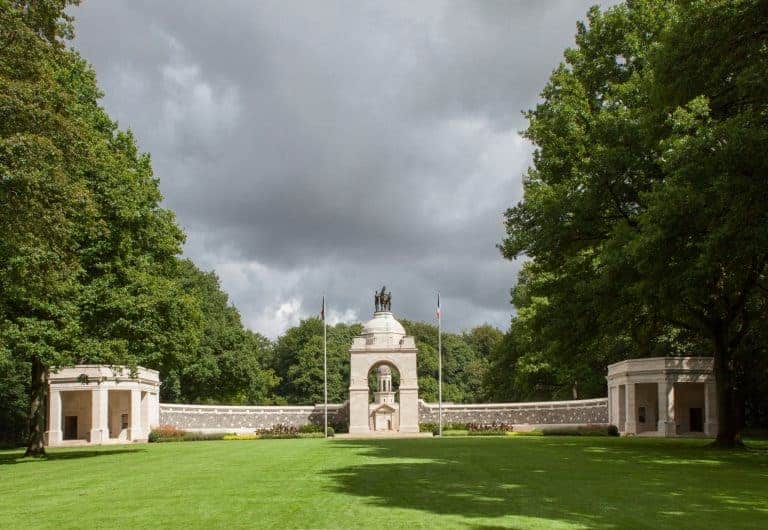
However, this was not the first memorial to be erected there in memory of the South Africans. On 17 February 1918 (i.e. before the war had even finally come to an end), a memorial service was held at Delville Wood during which a wooden cross with the following inscription was erected:
In memory of the officers and men of the 1st South African Brigade who fell in action in July 1916 in the Battle of the Somme.
Soldiers also made crosses from the wooden stumps left after the battle, and these were erected in various places, including at the Castle in Cape Town, opposite the City Hall in Durban, at St John’s College and the Transvaal Scottish Regimental Head Quarters Museum in Johannesburg and in the Garden of Remembrance in Pietermaritzburg. The latter is famous for the inexplicable phenomenon that, after more than a century, it still “weeps” resin every July. It is therefore known as “Delville Wood’s Weeping Cross”.
In retrospect, no strategic advantage was derived from the enormous loss of human life at Delville Wood. Neither was the First World War (as was stated on monuments erected after it had come to an end) the war to end all wars.
Today, the site in northern France is a lush green oasis once again. The hornbeam remains standing, despite all the shrapnel in its trunk. The names of the fallen are beginning to be forgotten, which is why memorials like the one at Delville Wood are essential to remind us of the hardships, courage and sacrifice of those who preceded us.
Also read: General De Wet on a plain in The Netherlands
Share on

Latest articles