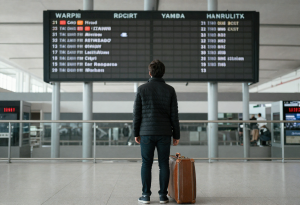



Anyone who has ever travelled the world with the so-called Green Mamba (also known as a South African passport) in hand knows the painful process of visa applications.
According to the report from June 2025 on the website visafreecountries.com, there are 78 countries for which South Africans do not require a visa. However, there are still 106 countries that require an ordinary businessperson or tourist to first obtain a visa before travelling there.
The Henley Passport Index is the most authoritative ranking of the world’s passports. It is based on official data from the International Air Transport Association (IATA), and the rankings are compiled according to the number of destinations that holders of a particular passport can visit without a visa. According to the Henley Passport Index, the Green Mamba is currently number 53 on the list of the most travel-friendly passports in the world. All I can say to holders of number 54 and all those after that is, “Good luck!”
Unfortunately, my work and my itchy feet rarely lead me to one of those 78 welcoming countries. No, I always end up at the counter of a “visa centre,” trembling and clutching a folder with more sheets of paper than the pages of Kook en Geniet.
“What did you learn from the process?” Sue-Ann de Wet of AfriForum Worldwide asks me about my latest experiences. The responsible little voice inside me says, “Not to cross the country’s borders!” But I’m currently waiting for a visa, so it wouldn’t be beneficial to sidestep the question so easily. That’s why I answer that I have endless respect for people who emigrate, because if a visit requires so much cost and paperwork, I can only imagine how it would be to convince a country that you should be accepted there permanently.
But let me stick to practical advice that might help someone. Some of the tips may seem vague because each country’s requirements are different. Even the Schengen countries, which technically all apply the same border controls, have different requirements for visa applications. Countries can also change their requirements at short notice. Therefore, be vigilant and constantly monitor the situation when planning a trip.
Step one is to determine whether you need a visa. Almost every country nowadays has an online form where you can fill in your planned trip details (destinations, purpose of the trip, duration of the visit) to determine the specific type of visa you need to apply for.

Your passport should still be valid for a reasonable period when you plan to travel. You cannot apply for a visa, depart or return too close to the date it expires. It should also still contain at least two blank pages – visa stickers cannot be affixed to existing stamps.
If you have the kind of loved ones who might want to treat you to a trip abroad, or if you participate in competitions where you can win overseas trips, have a job that may require international visits, or have friends or family abroad who may need your help at short notice, make sure you always have a valid passport. Rather have a passport that you never use than miss out because Home Affairs is dragging its feet with your passport application. This is a dilemma that AfriForum cannot help you with!
Ensure you know which documents you need to bring to your visa application appointment. These days, some countries allow you to fill out forms partially or entirely online or even attach documents electronically. Others offer expensive options to enable you to do this. Choose what is easiest and most affordable for you.
If you’re in doubt about whether to attach or bring something, do it. For example, one morning I was on my way to a visa appointment with my passport, as the online instructions specified that’s all you need to bring: just the passport itself. However, when I got to the counter, they suddenly required a photocopy of it as well. Luckily, I had one with me.
Everyone is afraid of foreigners going bankrupt and becoming a burden on the state, so you usually have to attach the last three months of bank statements. In October 2024, I printed the statements, and the bank only confirmed their accuracy with a stamp. By December, I had to apply for a visa again, and then suddenly I was no longer allowed to print the statements myself – the bank had to do it. I wasted a lot of paper. Then I applied again in 2025, and I made the mistake of going to the bank on a Friday afternoon. The man who helped me had already heard the weekend’s Lorelei voice calling and left out a bunch of pages. So, check very carefully and ensure that the printed information is complete.
Many countries no longer handle their own visa applications. For example, Switzerland, Belgium and Portugal use VFS Global, Britain uses TLScontact, and France uses Capago. You will speak to a South African employee of the centre and not to someone from the country you are visiting at an embassy. They may not indicate whether your application will be successful, and they usually don’t have any information about the country you are travelling to. So, it is not helpful to ask tourism questions; instead, address these online to the tourism bureau of the place you want to visit.
Make sure you know where to find the centres where you need to apply for visas, how appointments work, whether there is parking, and what the traffic is like on the way there at certain times of the day. It is better to be too early than too late. If you are late, you may lose your appointment and may have to pay a high price for a new opportunity.
Timing is as important as taking a soufflé out of the oven. Especially before peak times, such as Easter, summer in the country you want to visit and Christmas, there will be more applications and it will take longer to process your application. Sometimes, countries have system problems, and applications also take an extremely long time to process. Keep an eye on the websites of the countries and the visa centres for advice in this regard.

Perhaps the most important is NEVER to lie or give false information. If you are not sure, say so rather than making up an answer. If you are married but your passport is still in your maiden name, explain and ensure you fill out the form correctly, rather than trying to keep things simple and not mention that you are married. If one country labels you as someone who provides unreliable information, it could cause you major problems for the rest of your life when you want to travel.
Finally, stay calm and friendly during your visa appointment, even if you have to wait a long time, the air conditioning has stopped working, and the people sitting next to you have twins with colic … That officer (who can be either sullen or nice) is going to be much more helpful and process your application faster if you show the good manners your mother taught you. It can also be no fun working with a bunch of people every day who all ask the same questions and make mistakes.
Have you had any weird experiences with your visa applications? Or do you have any great tips for us? Let us know! And enjoy your travels.
Share on

Latest articles