


Role changes in the house and when children feel more at home than their parents
By Sue-Ann de Wet
Emigration changes more than just your address. It changes your rhythm, your expectations, your role in the house – and often also your marriage. Even couples who prepare well, plan financially and decide together later find that the emotional impact of emigration is often quite unpredictable.
The move to another country is not only a logistical process; it is also an identity shift. And when identity shifts, dynamics also shift.
Role shifts in the house
After emigration the roles in many families change quickly. One parent possibly gets employed faster and becomes the main breadwinner, while it takes the other more time to enter the employment market. Sometimes one parent has to work in a lower job position as what they were accustomed to; in other cases, one parent has to stay home to look after the children because preschool care is too expensive or inaccessible.
These shifts in roles not only have an influence on finances, but also in pride, self-worth and the power balance.
The working parent possibly carries the weight of financial survival and new professional expectations. The parent who stays home to look after the children or who is still looking for employment can feel they are losing their independence or professional identity. Even household chores change: Who does what? Who manages the paper work? Who navigates the new system of banks, schools and immigration documents?
Where roles were previously a matter of course, it now needs to be renegotiated. This is where the challenge lies: When parents fail to deliberately discuss these changes, underlying stress start to slowly grow. Emigration put communication under pressure and, when under pressure, cracks start to show faster.
The emotional distance that sometimes follows
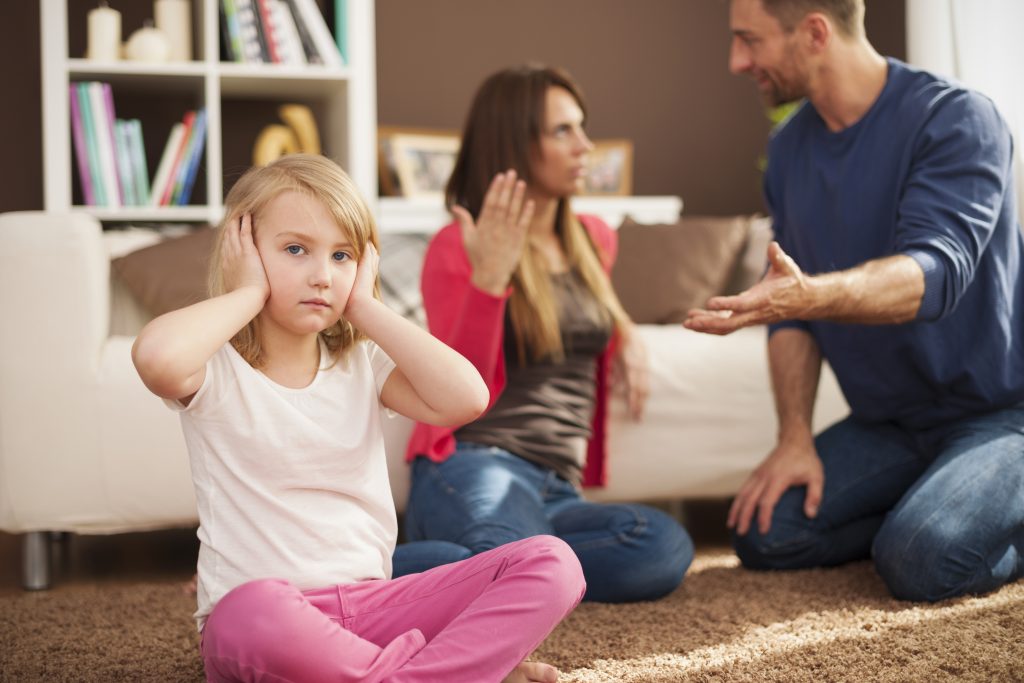
When parents are busy finding their feet, it is quite easy for them to slip into survival mode. Discussing centre around practicalities: work, visas, school correspondence and budgets. Intimacy and emotional connections are sometimes postponed “until things settle down”.
But for many families, things do not settle down so quickly. If space for each other is not created, two people who made the move together can quickly start living alongside one another instead of together.
Yet, this does not have to be the outcome. Emigration can also deepen a marriage when couples again learn to function as a team; when both acknowledge: We are both uprooted, we are both tired and we are both busy adapting.
Open honesty then becomes a bridge and not a weakness.

When children become more at home than their parents
An interesting – and sometimes painful – phenomenon in emigrating families is how quickly children adapt. Children acquire the new language faster. They make friends more easily. They understand the new culture, local customs and humour. Within a few months their accents change. They start using words that their parents do not know. They feel comfortable in their new school system.
On the other hand, parents often carry the longing much longer. They miss their people. They keep on comparing. They feel like outsiders in meetings or at social interactions.
When children start saying “But this is how we do things here”, it may create a silent loss in parents. It is not that you do not want your child to adapt – it is that you realise their roots are now growing in different soil than your own. This difference in adapting may create stress. Children feel at home. Parents feel like being halfway between two worlds. It requires wisdom not to burden your children with your own longing, but also not to let your own culture fade completely. Language, tradition and stories remain important – not as resistance to integration, but as anchor for identity.

The conscious choice to reconnect
Emigration changes your marriage. It is almost unavoidable. But change does not necessarily mean decline. It means development, provided it is handled consciously.
It helps to regularly ask:
- How are you really doing?
- What are you unsure about?
- What do you miss?
- What gives you hope?
And also:
- How can we make time for ourselves again?
For families across the world the balance between adapting and conserving remains a daily process. At AfriForum Wolrdwide we often hear how language, culture and community play a stabilising role in this change. When you meet other South Africans in your community, or hear your children speak Afrikaans, it reminds you that you do not have to give up everything to move forward.
Emigration changes your marriage. But it can also be an opportunity to get to know one another again; not only as husband and wife, but as two people who are building a new world.
And perhaps the greatest growth lies in this: to choose again, not only for a country, but for one another.

Do not adapt in silence
When emigration challenges your marriage, it does not mean that you are failing; it means that you are busy changing. Talk about it. Seek support. Build your relationship deliberately, just as you are building a new life.
And if you sometimes feel like you are floating between worlds, remember that you are not alone. Connect with other South Africans in your area, keep your language alive in your home and make use of platforms like AfriForum Worldwide to once again find your anchors.
A new country demands adaptation.
But a strong marriage demands involvement.
Choose one another. Again. And again.
Also read: Return or stay?
Share on

Latest articles